


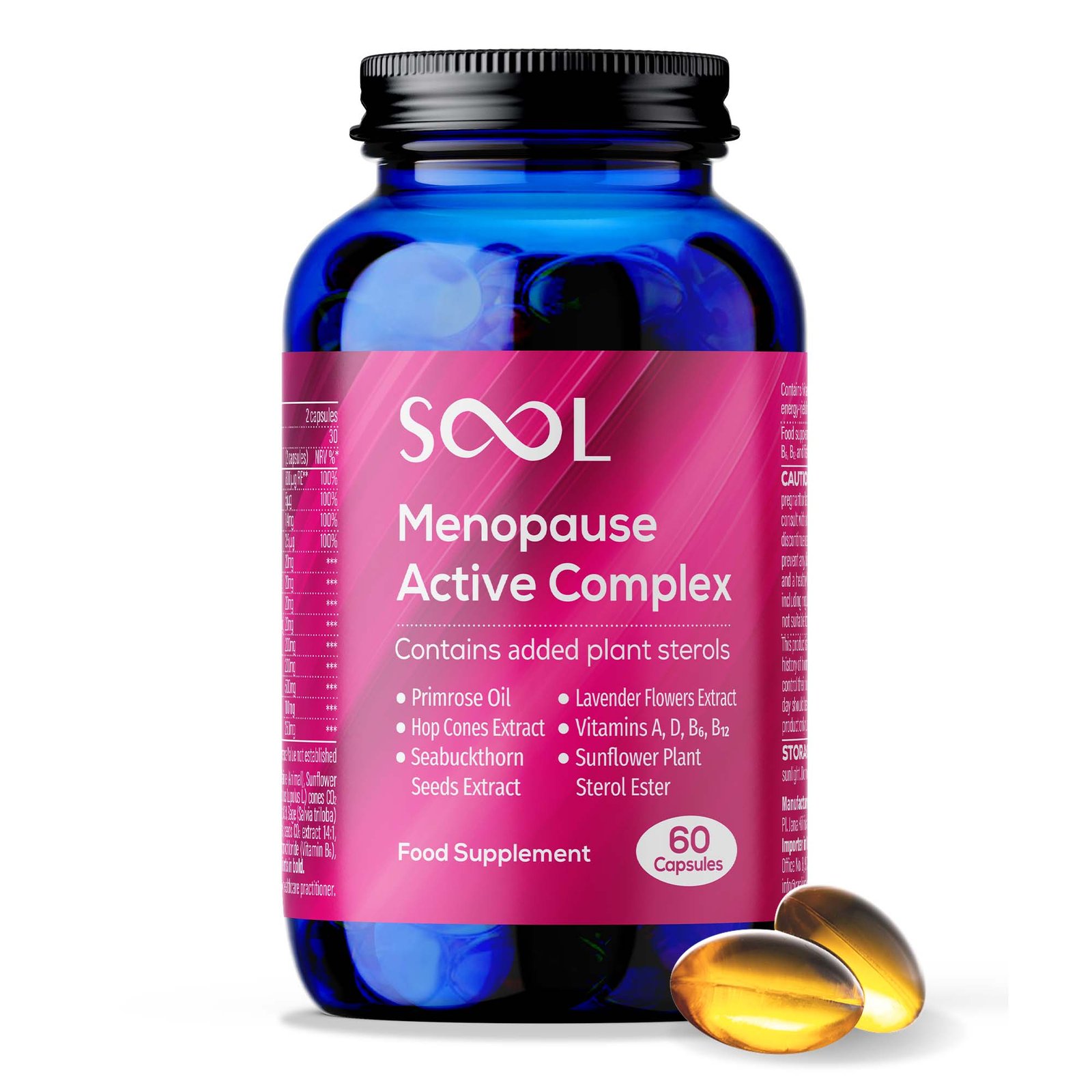


Menopause Active Complex is a capsule-based food supplement that brings together botanical extracts, oils and vitamins in one format. Rather than focusing on a single ingredient, it uses a mixed formula intended for adults aged 18 and over.
The formula includes plant-derived extracts such as hops, lavender, sage and seabuckthorn. These sit alongside fish oil with EPA and DHA, primrose oil and sunflower plant sterol ester, creating a blend that spans several ingredient types.
Vitamins A, D3, B6 and B12 are also part of the ingredient profile.
Understanding these categories can make it easier to read the label clearly and see how the product differs from a simple vitamin, herbal tea or single-oil supplement.
This guide looks at the capsule format, the components named on the product information and the practical points worth considering before adding a mixed supplement to an everyday routine.
Ingredients at a glance
The formula can be understood in three broad groups: oils, botanical extracts and vitamins. Fish oil is listed with EPA and DHA, while primrose oil and sunflower plant sterol ester add further oil-based ingredients. These components give the product a different profile from a formula made only from dried herbs or only from vitamins.
The botanical portion includes hops, lavender, sage and seabuckthorn extracts. An extract is a prepared ingredient derived from plant material, so it should not be assumed to be identical to using the same plant as a food, tea or essential oil. Reading the individual names is more useful than treating “botanical” as one single category.
The vitamin list includes vitamins A, D3, B6 and B12. Their inclusion means that anyone who already takes a multivitamin or a separate vitamin product may want to compare labels across their routine. This is a practical way to notice overlapping ingredients, rather than making decisions based on the product name alone.
Pack and serving format
SOOL Menopause Active Complex contains 60 capsules. The listed serving size is two capsules, which provides 30 servings per container. These figures describe the product’s format and can help when working out how it would fit into a regular routine.
Capsules offer a fixed format, without the measuring associated with drops or powders. The stated serving should be followed as directed on the current label; it is not appropriate to assume that a different number of capsules would suit the same purpose. The product is intended for adults aged 18 and over.
Looking beyond the name
A product name can indicate the context in which a supplement is presented, but the ingredient panel provides the clearer practical information. In this case, it shows a combination of fish-derived oil, plant-derived ingredients and vitamins rather than a single active component. That distinction matters when comparing products with similar names but different formulations.
It is also sensible to consider personal dietary preferences and any other supplements already in use. Fish oil, for example, is relevant for people avoiding fish-derived ingredients. For individual questions involving medicines, allergies or specific dietary requirements, a pharmacist or qualified healthcare professional can help assess whether the listed ingredients need further consideration.
Making capsules part of routine
A capsule supplement can be easier to accommodate than a format that needs measuring or mixing. The key practical consideration is not finding a perfect time of day, but choosing a regular point in an existing routine and following the directions on the pack. Keeping the container in a place associated with that routine may help make it easier to remember.
The two-capsule serving means the format is designed around a daily portion rather than a single capsule. If taking two capsules at once does not suit someone’s usual habits, the label is the appropriate place to look for guidance rather than assuming that the serving can be divided or changed.
It is also worth viewing a supplement routine as part of the wider picture. A person already using a multivitamin, fish-oil product or herbal supplement may wish to compare ingredient lists before adding another formula. This is especially relevant here because the formula brings together oils, plant extracts and several vitamins in one capsule-based product.
THC-free focus
Carefully selected products with a clear THC-free positioning and straightforward product information.
Selected European suppliers
We work with selected European suppliers and established brands with documented product information.
Clear and practical information
Simple guidance about product formats, ingredients and everyday use without unnecessary marketing language.
Shop CBD4YOU
Explore our current CBD range and find the product format that best fits your everyday routine.
Good to know
- The product is intended for adults aged 18 and over.
- Use the stated directions on the label when fitting the capsules into a regular routine.
- Fish oil is included, so the formula may not suit people avoiding fish-based ingredients.
- Compare the full ingredient list with other vitamins, oils or herbal products already in use.
- Seek individual advice from a pharmacist or qualified healthcare professional if medicines, allergies or dietary restrictions are relevant.
- Keep the product in its original packaging and follow any storage instructions provided on the pack.
Reading a mixed formula
Mixed supplements can be more difficult to assess at a glance than a product built around one familiar nutrient. Menopause Active Complex combines oils, botanical extracts and vitamins, so its ingredient list is best read as a whole rather than as a series of separate promises. The presence of an ingredient identifies what is in the formula, but it does not by itself describe an individual experience or outcome.
There are practical differences between the ingredient groups. Fish oil, primrose oil and sunflower plant sterol ester are oil-based components, while hops, lavender, sage and seabuckthorn appear as extracts. Vitamins A, D3, B6 and B12 are micronutrients. Recognising these categories helps a reader compare this type of all-in-one supplement with a single oil, a standalone vitamin or an individual botanical product.
That comparison matters when looking at an existing cupboard. Someone who already uses a multivitamin may want to note the vitamins included here, while someone taking an omega-3 product may wish to note the fish oil. This is not a reason to draw conclusions from a partial list; it is simply a useful way to identify possible overlap before deciding whether a formula fits a wider routine.
Botanical names deserve the same careful reading as vitamins. Hops, lavender, sage and seabuckthorn are not interchangeable ingredients, and an extract is a specific form of plant-derived ingredient rather than a description of the whole plant. The full label remains the most useful reference for the precise formulation and stated directions.
For people using prescribed medicines, managing allergies or following a restricted diet, a pharmacist or other qualified healthcare professional can help assess an ingredient list in the context of individual circumstances. This is particularly sensible with a multi-ingredient product, where a quick glance may not reveal every point relevant to a personal routine.
Related products
Choosing information over claims
Products described for a particular life stage can invite broad expectations, especially when their names refer to familiar experiences. A more useful starting point is to separate the product title from the information that can be checked: its format, listed ingredients, stated age group and directions. These details explain what the product is without suggesting that every ingredient will have the same relevance for every person.
Ingredient lists are also more informative when read in context. For example, seeing lavender or sage in a formula tells you that those botanical extracts are present, but it does not make the product equivalent to using those plants in food, tea or another supplement format. Likewise, vitamins are part of the overall formulation and should be considered alongside other dietary sources and supplements.
Personal priorities can help make comparisons clearer. Someone focused on avoiding fish-derived ingredients will notice the fish oil first, while someone already using vitamin products may focus on the added vitamins. A person who prefers a simple formula may choose to compare the number and types of ingredients, rather than relying on the product name alone.
There is value in allowing time for this kind of comparison before making a purchase. Reading the current pack information, considering existing products and seeking qualified advice where personal health circumstances or medicines are involved are measured ways to approach a multi-ingredient supplement. This keeps the decision centred on transparent information rather than assumptions about outcomes.
Frequently asked questions
How many capsules are in SOOL Menopause Active Complex?
SOOL Menopause Active Complex contains 60 capsules. Its listed serving size is two capsules, giving 30 servings per container. This makes the pack information straightforward to compare with a personal routine, but the label should always be checked for the current directions and full product details before use.
Which ingredients are included in SOOL Menopause Active Complex?
The listed ingredients include fish oil with EPA and DHA, sunflower plant sterol ester, primrose oil, and extracts of hops, lavender, sage and seabuckthorn. It also contains vitamins A, D3, B6 and B12. The ingredient list is useful for identifying the different types of oils, botanicals and vitamins in the formula.
What does a capsule format offer compared with a liquid supplement?
Capsules provide a pre-measured format that can fit easily into an established daily routine. Unlike a liquid, they do not require measuring a portion at the time of use. Some people may prefer liquids for flexibility, while others may find capsules more convenient; the choice is largely about format and personal preference.
Why are fish oil and primrose oil listed separately?
Fish oil and primrose oil are distinct oil-based ingredients. The fish oil in this product is listed with EPA and DHA, while primrose oil appears as its own ingredient. Seeing them separately helps readers understand that the formula combines more than one source of oil rather than relying on a single oil ingredient.
Are botanical extracts the same as whole plants?
No, a botanical extract is not necessarily the same as a whole plant ingredient. An extract is made from plant material and included as a formulated ingredient, whereas a whole plant may be used in a different form. The product lists hops, lavender, sage and seabuckthorn extracts, alongside oils and vitamins.
Who is this supplement intended for?
The product is intended for adults aged 18 and over. That age statement is a product-use boundary, rather than an indication of a particular result. Anyone considering a supplement should also review the current label carefully, particularly if they have individual dietary requirements or use other supplements.
Should I compare vitamin amounts with my other supplements?
Yes, it is sensible to compare the label with any other products you already take. This formula includes vitamins A, D3, B6 and B12, so checking the wider routine can help avoid overlooking overlapping ingredients. A pharmacist or other qualified healthcare professional can offer individual advice when needed.
Is fish oil relevant for people with dietary restrictions?
Yes, fish oil is an important point to note for anyone following a fish-free diet or managing an allergy or sensitivity. It is listed as an ingredient in this formula and should be considered alongside the complete label. Do not rely on a product category name alone when checking dietary suitability.
When is the best time to take a capsule supplement?
The best time is generally the time that helps a person follow the product’s stated directions consistently. The verified product information identifies a serving size but does not specify a preferred time of day. Follow the label rather than adding a schedule based on assumptions, and choose a routine that is practical to maintain.
What should I look for before choosing a botanical supplement?
Start by reading the full ingredient list, the stated serving information and the intended age group. It is also useful to consider dietary restrictions and whether other supplements already contain similar vitamins or oils. Where personal circumstances or medicines may be relevant, asking a pharmacist or qualified healthcare professional is a sensible next step.
Key takeaways
Menopause Active Complex is a capsule-based supplement for adults aged 18 and over. The formula combines fish oil with EPA and DHA, sunflower plant sterol ester and primrose oil with botanical extracts of hops, lavender, sage and seabuckthorn. It also includes vitamins A, D3, B6 and B12, making it a mixed-ingredient formula rather than a single-nutrient product.
The pack contains 60 capsules, with a listed serving of two capsules and 30 servings per container. When considering any supplement, it is useful to read the complete label, account for other vitamins or oils already used, and follow the stated directions. A considered comparison of ingredients, format and personal circumstances supports an informed personal choice.
These products are not intended to diagnose, treat, cure, or prevent any disease. Results may vary. If you are taking medication, pregnant, or breastfeeding, please consult your doctor before use. These products contain less than 0.2% THC and are in compliance with current EU legislation.