




Omega-3 and vitamin D3 softgels bring two familiar dietary nutrients into a compact capsule format. For people who do not want to measure a liquid oil, softgels offer a simple way to consider a combined formula as part of an everyday routine.
These products vary more than their similar appearance might suggest. The source of omega-3, the amount of EPA and DHA, the form and quantity of vitamin D3, and the capsule material can all affect whether a particular formula fits a person’s preferences.
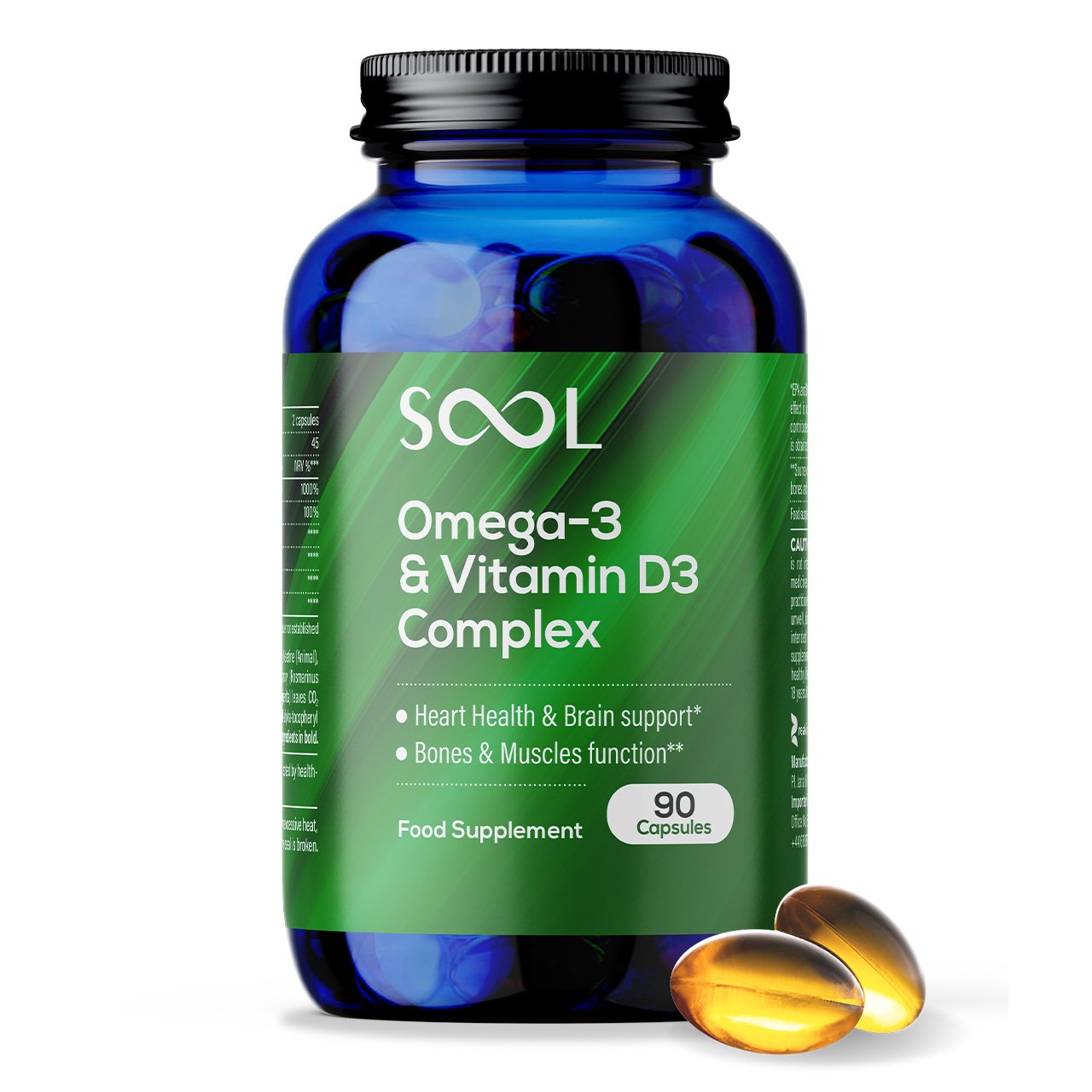
Omega-3 & Vitamin D3 Complex uses fish oil alongside vitamin D3 in softgel capsules. Its formula also includes several additional ingredients, so it is worth reading the product as a complete formulation rather than focusing on one nutrient alone.
This guide looks at the information that is most useful to compare: the capsule format, serving structure, named nutrients and the practical details that can be easy to miss on a supplement label.
Inside the formula
The central ingredients are fish oil and vitamin D3. Fish oil provides the omega-3 fatty acids EPA and DHA, which are named separately because they are distinct components of the oil. Vitamin D3 is included alongside them in the same softgel format, making this a combined formula rather than a single-ingredient fish-oil product.
The formula also contains vitamin E, conjugated linoleic acid, phosphatidylcholine from soy lecithin, rosemary extract and peppermint extract. These ingredients should be considered as part of the complete composition, especially by anyone comparing products with shorter ingredient lists. Their presence does not remove the need to look at the stated nutrient amounts and the full label.
Serving and pack structure
Omega-3 & Vitamin D3 Complex contains 90 softgel capsules. The listed serving size is two capsules, giving 45 servings per container. This is a practical distinction: a pack that appears large by capsule count may last for a different length of time depending on the serving size shown on the label.
When comparing softgels, use the serving as the starting point rather than assuming one capsule is a daily portion. It also helps to compare EPA, DHA and vitamin D3 on the same basis, since labels may present values per capsule or per serving. Following the directions supplied with the individual product is the clearest way to use its stated serving information.
Capsule material matters
The softgels contain animal gelatine. That makes the capsule material relevant for vegetarians, vegans and anyone who avoids animal-derived ingredients for personal, cultural or religious reasons. It is a detail that can be overlooked when attention is focused only on the oil inside the capsule.
Fish oil and soy lecithin are also notable for readers with relevant allergies or sensitivities. A complete ingredient check is more useful than relying on the product name alone, particularly in blended formulas. If there is uncertainty around an allergy, dietary requirement or use alongside other supplements, individual professional guidance may be appropriate.
Reading beyond the front
A straightforward label comparison asks a few separate questions: what is the omega-3 source, which fatty acids are specified, what amount of vitamin D3 is listed, and what else is used in the formula? This approach distinguishes the key nutrients from supporting ingredients without assuming a particular effect from the product.
It also helps keep expectations realistic. A supplement label is primarily a record of format, ingredients and stated quantities. Those details offer a sound basis for deciding whether to explore a product further, but they are not a guarantee of a particular personal outcome.
Building a simple routine
A capsule format can suit people who prefer a measured supplement rather than a liquid oil. The listed serving for this product is two softgels, so it may be easier to build it into an existing daily cue, such as a regular meal or another established part of the day. The aim is not to create a complicated regimen, but to choose a time that is realistic to remember.
The 90-capsule pack provides 45 listed servings when used at that serving size. Looking at the pack in terms of servings, rather than capsules alone, can make it simpler to plan ahead and compare it with the frequency suggested on the label. Follow the individual product directions rather than assuming that every omega-3 or vitamin D3 softgel is used in the same way.
If the routine changes, it is useful to revisit the label instead of doubling up to compensate. Keeping the container with its information nearby also makes it easier to check the ingredient list when sharing a household space or sorting a travel bag. Consistency is a practical matter of organisation, not a promise about a particular outcome.
THC-free focus
Carefully selected products with a clear THC-free positioning and straightforward product information.
Selected European suppliers
We work with selected European suppliers and established brands with documented product information.
Clear and practical information
Simple guidance about product formats, ingredients and everyday use without unnecessary marketing language.
Shop CBD4YOU
Explore our current CBD range and find the product format that best fits your everyday routine.
Good to know
- The softgel shell contains animal gelatine, so the product is not a vegetarian capsule format.
- Fish oil and soy lecithin are included; check the full label carefully if fish or soy are relevant allergens.
- Fish oil is the listed source of EPA and DHA, two distinct omega-3 fatty acids.
- Compare nutrient quantities per stated serving, not simply the number of capsules in a pack.
- Supporting ingredients are part of the full formulation and should be read alongside the main nutrients.
- Use the individual product label as the final reference for directions and current ingredient information.
Combined or separate formats
A combined omega-3 and vitamin D3 softgel can make sense as a format choice when someone prefers to keep related supplements in one container. It offers a single ingredient list and one serving structure to assess. That convenience, however, is separate from the question of whether the quantities in a particular formula match what someone is looking to include in their routine.
Choosing separate products gives more flexibility. A person can compare fish-oil formulas independently from vitamin D3 products and consider each serving amount on its own terms. This may be useful when the preferred omega-3 source, capsule format or vitamin D3 quantity does not appear together in one product.
Neither approach is automatically simpler for everyone. A combined format reduces the number of containers, while separate formats can make it easier to change one part of a routine without changing the other. The useful comparison is therefore not just combined versus separate, but how clearly each option states its nutrient quantities, ingredients and serving information.
It is also worth considering the wider supplement cupboard. A multinutrient product or another vitamin D supplement may already contain some of the same nutrients. Reading labels side by side helps establish the total amounts being considered, rather than judging each product in isolation.
The supporting ingredients deserve the same clear-eyed approach. In this complex, vitamin E, conjugated linoleic acid, phosphatidylcholine from soy lecithin, rosemary extract and peppermint extract are part of the formula alongside fish oil and vitamin D3. Their presence may distinguish the formulation from a simpler fish-oil-and-vitamin-D product, but it does not by itself indicate that one format is the right choice for every person.
Related products
Reading nutrient quantities
Clear label reading starts by separating the names of ingredients from the amounts supplied. “Fish oil” describes a source ingredient, whereas EPA and DHA are the individual omega-3 fatty acids within that source. Two products can list fish oil yet provide different EPA and DHA quantities, so a like-for-like comparison needs the figures shown per stated serving.
The same principle applies to vitamin D3. Its presence in a product name confirms the nutrient is included, but the label should show the amount for the serving used in the comparison. Units may be presented in different ways between products, so reading the stated amount carefully is more reliable than relying on a front-of-pack description.
For a combined softgel, use the listed serving as the reference point before comparing values. This prevents an individual capsule amount being compared with a two-capsule serving from another formula, or the reverse. It also gives the rest of the ingredient list its proper context.
Some formula components are named for transparency but are not the principal nutrients a reader may be trying to compare. In this product, vitamin E, conjugated linoleic acid, phosphatidylcholine from soy lecithin, rosemary extract and peppermint extract sit alongside fish oil and vitamin D3. Their inclusion is useful to note, particularly for dietary and allergen checks, but it should not be used to assume an unstated purpose or outcome.
A careful comparison is therefore quite straightforward: start with the serving, read the amounts for the nutrients of interest, then review the source ingredients and capsule materials. That sequence keeps the decision grounded in the information the label actually provides.
Frequently asked questions
How many softgels are in Omega-3 & Vitamin D3 Complex?
Omega-3 & Vitamin D3 Complex contains 90 softgel capsules. Its listed serving size is two capsules, which gives 45 servings per container. This calculation can be useful when comparing pack formats, although the product label remains the appropriate place to confirm the stated directions and current product details.
Which ingredients are included in Omega-3 & Vitamin D3 Complex?
The formula includes fish oil providing EPA and DHA, vitamin D3, vitamin E, conjugated linoleic acid, phosphatidylcholine from soy lecithin, rosemary extract and peppermint extract. The softgel shell contains animal gelatine. Anyone checking dietary preferences or allergens should read the full label carefully before choosing a supplement.
What makes a softgel different from a standard tablet?
A softgel is a sealed, smooth capsule that commonly holds oils or oil-based ingredients, while a standard tablet is usually compressed from powdered materials. The two formats are not interchangeable in composition. When comparing them, look beyond appearance and review the ingredients, nutrient amounts per serving and capsule materials.
Why are EPA and DHA named separately on omega-3 products?
EPA and DHA are two individual omega-3 fatty acids found in fish oil. Listing them separately helps readers understand the fatty-acid profile rather than seeing only a general fish-oil amount. For a meaningful comparison between products, check the stated quantity of each nutrient per serving where that information is provided.
Is the serving size the same as the amount of each nutrient?
No, a serving size tells you how much of the product forms one stated portion, whereas nutrient amounts describe what that portion supplies. A two-capsule serving, for example, should be read alongside the quantities listed for vitamin D3, EPA and DHA. This avoids comparing products on capsule count alone.
Are all omega-3 and vitamin D3 softgels suitable for vegetarians?
No, suitability depends on both the oil source and the capsule shell. Fish-derived omega-3 formulas are not vegetarian, and many softgels use animal gelatine. Plant-based alternatives may use different omega-3 sources and capsule materials, so dietary requirements should always be checked against the individual product label.
Which allergens deserve attention with this type of supplement?
Fish and soy are particularly relevant ingredients to identify in some omega-3 softgel formulas. Fish oil may be present as the omega-3 source, while soy lecithin can provide phosphatidylcholine. Allergens and their presentation vary between products, so people with allergies should examine the complete ingredient and allergen information carefully.
Should a combined supplement be considered alongside other products?
Yes, it is sensible to consider a combined supplement alongside anything else already used in a routine. This helps avoid overlooking overlapping nutrients, particularly when several multinutrient products are involved. Compare the amounts shown per serving and, where personal circumstances require it, seek individual advice from a qualified professional.
Do supporting ingredients indicate a guaranteed outcome?
No, an ingredient list identifies what a formula contains; it does not guarantee a particular result for an individual. Ingredients such as vitamin E, rosemary extract, peppermint extract or conjugated linoleic acid should be considered as part of the overall formulation. Product choices are best based on clear label information and personal requirements.
What is the simplest way to compare two softgel supplements?
Compare like with like by using the stated serving size first, then review the quantities of the nutrients you are considering. Also compare the oil source, capsule materials, supplementary ingredients and the number of servings in each pack. This approach is more informative than judging a product by capsule count or front-label wording alone.
Key takeaways
Omega-3 and vitamin D3 softgels are a compact way to bring fish-derived EPA and DHA together with vitamin D3 in one measured format. A useful comparison starts with the stated serving size and the nutrient quantities per serving, rather than with the number of capsules alone. The capsule shell and the full ingredient list also matter for dietary preferences and allergy considerations.
Omega-3 & Vitamin D3 Complex is an example with a listed two-softgel serving and 45 servings in a 90-capsule pack. Its formula includes fish oil, vitamin D3 and several supporting ingredients, while the softgels contain animal gelatine. Check the individual product label and follow its stated directions.
Taking a moment to compare amounts, formats and ingredients can support a calm, informed personal choice.
These products are not intended to diagnose, treat, cure, or prevent any disease. Results may vary. If you are taking medication, pregnant, or breastfeeding, please consult your doctor before use. These products contain less than 0.2% THC and are in compliance with current EU legislation.